Uncategorised

The wolf hit

Bullet hit squib effect in a wolf

One example from one of our more than 400 users is when a wolf was to be shot in a dramatic sequence for the 2015 thriller “The Dark Side of the Moon” (Die Dunkle Seite des Mondes). The production did not feel CGI-hits looked convincing enough, so after testing several ideas and keeping the safety of the animal in mind the wolf trainer used the air squib unit and a trained wolf. The visual effect worked out really well and the low sound generated by the unit did not frighten the animal. After training the wolf to fall down on command, the scene was ready to be filmed. The unit was strapped with a dog harness onto the wolf, hidden in the fur. Then stage blood was filled, and the nozzle was aimed outwards. When the wolf was perfectly positioned in the viewfinder, the trainer pushed the radio control transmitter to activate the squib effect. Simultaneously the wolf dropped as it had been trained to do. The hit was very convincing and only gave off a minimal sound making this an ideal problem solver in an otherwise rather tricky situation.


The absence of loud noise when rigging a safe bullet hit may be a great advantage in cases when animals are involved. In addition, it is a big plus during nighttime filming, when jittery or inexperienced actors are involved, when actors are close to each other, and even in cases where you do not want to pass out earplugs to the whole crew.

Kudos to Mr. Kihm for rigging this unusual effect and sharing the info with us!

If you have other unusual or regular news to share with the bullet hit community – let me know!

The wolf hit Read More »

Friday the 13th

Friday the thirteenth

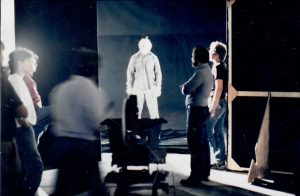
Oh, the blood-drenched memories of Jason at the shoot of Friday the 13th, part 6!  One of the first films I was involved in, in L.A. in 1986.  At the age of 22, I was up to my elbows in fake blood on the set and was impressed with the new, tall Jason, compared to what he looked like in the prequels! Well, if you get struck by lightning, you probably stand a little taller, right? My mentors Dave and George at CRC even had me dressing up in trash bags to make me easier to clean off at the end of the shift! At this time, I had not begun working with the air squib, but with all the blood flowing, it must have set something off in my mind for future, blood-curdling experiments with the air squib…

Great fun in L.A. I remember all that was on my old car radio in L.A. was a singing Gloria Estefan. I loved it!

Friday the thirteenth

I have no idea who took this studio photo, so let me know if you know who should be credited for this.

Friday the 13th Read More »

Durability

The safe air squib is built from professional products and materials, like stainless steel, aluminium, ABS plastic and bullet resistant Macrolone, and will stand by you through production after production.
The superior quality is just one of the reason the air squib is used by NATO forces and military training of first aid response teams. In addition, it is used in training for hostage training situations.
The air squib is backed with a 180 days guarantee against faulty workmanship.
Have a look at the video to get a brief idea of how strong the enclosure is.

Durability Read More »

Thaine

Thaine Morris

Thaine Morris

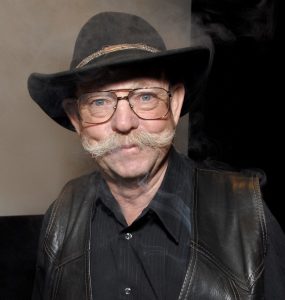
He won the Technical Achievement Academy Award in 1988 for the development of the DSC Spark Devices for motion picture special effects. The year after he was nominated for an Oscar for best visual effects in the movie Die Hard. Now Thaine Morris has retired from the sets, and runs a store that sells special effects equipment.

–       I find myself spending more time talking people out of using pyrotechnics than talking them into using them. I always say, “don’t push the tech any higher than you have to”. The funny thing is my company is one of the biggest distributors of explosive squibs in the US, Thaine Morris says.


So, even though your main product is an explosive squib you talk people out of using it?
–      You have to understand that back when I was working, there was no good alternative to pyrotechnics. And it was a hassle. Imagine the director wants to reshoot a shooting scene, which happens a lot, and you have to rig it with pyrotechnics. First you would have to find a new shirt since the one you have used has been torn. Then you might have to find new explosives, which can be really expensive and time consuming. And then maybe the director is satisfied. With the air powered squib, you just rig the scene over and over. Maybe you need to clean the clothing, but that’s it, he says.

 –      The thing about the Air Squib is that it is made by an experienced FX specialist who developed it while working on set. It is by far the best one out on the market, says Morris.

Morris is impressed by how good the end result is, even though the air squib is a much simpler and cheaper way to get a bullet hit then by using pyrotechnics.

–      I have an example of when I really would have needed the air squib, long before Olov had started working on it. One day on a movie set, the director changes his mind about a shooting scene and wants a child to be in it. Now in the US, you need a legal permit to use pyrotechnics around children. And they don’t hand out those permits straight away. So that scene had to be shot another day. Just imagine having an air squib there to save the day. It is the same with animals, you need a permit for them as well.


But the air squib can’t be all good, a lot of people still use pyrotechnics for bullet hit scenes.
–      Well, what the air squib does not do is tear the clothing. But most times that just makes it convenient. Of course, a lot of new FX specialists are really keen on using explosives because it seems cool. After having worked with special effects my entire life I realise the most important part is having equipment that is safe and easy to use. There is a reason you need those permits when using pyrotechnics. Sometimes everything goes well, but honestly, both actors and others on set have been injured more than once when using explosive squibs. And the injuries can be pretty bad. No one can get hurt by the air squib.

–      I really wish the Air Squib had been invented while I was still working on set. It has everything you need. Rig shots in theater shows night after night. Bring it to every set, because you never know when the director might change his or her mind. It is a life saver for all FX specialists.

Thaine Read More »

5 Incredible Special Effects Facts That You Didn’t Know

At AirSquib, we are huge fans of all kinds of special effects, not only the ones that include blood! Special effects have been around for a long time, believe it or not. They were first used in Georges Méliès film from 1890. (yes, can you imagine!), so we can say that they are as old as the cinema itself. Optical, mechanical, visual, post-production – there are many types of special effects, and here are our favorite fun-facts about a few of them:

1) The record-holding animated film

In case you didn’t know, animated movies fall into the category of special effects, and the highest-grossing stop-motion animated movie is Chicken Run, which earned around $225 million. Yes, that much. They are followed by another masterpiece by the same author, Wallace & Gromit: The Curse of the Were-Rabbit.

2) Come to the.. bright side?

Original Star Wars movies were filmed at the end of the seventies, and to create lightsaber blades, the filmmakers used a technique called Rotoscoping. This complicated process involves taking each individual frame of the film, and tracing over the same said frame, and repeating the process over and over again. They were not that digital-savvy back then and saying that it took a lot of work would be an understatement. But it looked awesome! I personally worked on “Big Trouble in Little China” where I was part of the team that inserted sparks on the flying Chinamen’s hats – using the Rotoscoping technique.

3) Stanley Kubrick, more like Stanley COOLbrick

We can all agree that Stanley Kubrick’s 2001: A Space Odyssey is an absolute masterpiece. However, during the scenes where the actors were levitating in no-gravity zones, Kubrick simply hanged them with wires to the top of the set and filmed them by placing the cameras at angles that hid the wires. He also saved money for not having to pay a special-effect artist. Genious.

4) Live action and animation combination

Disney’s famous movie Who Framed Roger Rabbit is the of the first movies to combine these two forms of art. Physical filming of the movie took a long, long time – 7 months. But post-production and animation, took double that time. It’s serious work, especially when you want to reach the Disney level of quality.

5) How they did it before the invention of AirSquib?

In the beginnings of cinema, directors, and sometimes actors, wanted everything to be as authentic as possible. That lead to some seriously questionable decisions being made. James Cagney, an American actor, said that several gangster films that he worked on featured people firing actual guns and putting actors in serious risk of being shot by a real bullet from real guns. He later formed Screen Actor’s Guild, devoted to protecting actors from directors’ risky ideas. If they only had AirSquib back then. If would have been much safer!

5 Incredible Special Effects Facts That You Didn’t Know Read More »

The Nozzle

The Nozzle

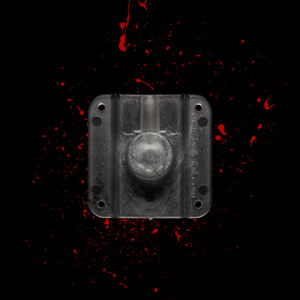
It was all in the nozzle! It was when I needed to make bullet hits on children and animals for movies, that I realized I needed to find an alternative to the explosive squibs. They were dangerous and therefore needed permits to be used around children. What can be better to use than the air we breathe? Since I like building and experimenting, I started working on an air powered squib. At first the blood would be all over the place. That meant the squib sort of worked, but it still didn’t look like a gun shot. I worked night and day to find a solution. The problem was that there was no good way of attaching the squib to the shirt of the actors. Until it hit me like the fake bullets! I couldn’t just tape the tube directly to the shirt, it needed a proper nozzle to both direct the blood effect and to attach better to the shirt. There it was – the smallest piece in the puzzle that made it all possible. Turned out it was all in the nozzle.

The Nozzle Read More »

Inventing The Squib

It all started at a movie shoot in Oklahoma, on the set of “UHF” starring comedian “Weird Al” Jankovic. I was only 22 years old and I was proud that SFX supervisor Marty Bresin had hired me to work with him. In a particular scene the actor playing “Ghandi” (the producer, if I remember correctly), eats meat (!) at a restaurant, flanked by two beautiful models. One restaurant guest calls out “Hey, baldy!” and in true Weird Al fashion, “Ghandi” stands up angrily and pulls out a machine gun and starts spraying the restaurant with bullets! We in the SFX department spent several days rigging one hundred small explosive charges called “squibs”, hiding the ignition wires, taping them to table legs, and rigging the charge to get the most out of every one of these expensive little explosives. The rigging had to be done carefully so you would know where each charge was located , ensuring the firing path would follow a natural flow when the actor turned the gun shooting blanks from left to right. The firing was done using a “clunker box” with stepper relays salvaged from telephone exchangers!

“UHF” was my first squib-job, and from then on, I was often called up by productions wanting a bloody bullet hit. In big productions, nobody cared about the cost of a few expensive squib hits, but I was just as often contacted by stage plays or low-budget films, and suddenly the prize was a problem. The price of freight costs for explosive devices, a special effects technician with a pyrotechnics license, city filming permits for explosive squibs that cost $30-40 each, the cost of wardrobe items that would be destroyed in the process; all turned out to be pretty hard sells.  For many it would be prohibitively expensive with a few rehearsals that could cost up to $1,000 per day! And then consider what a stage play would cost for a full month including hotel and expenses just for that single simulated daily bullet hit!

In addition, you would not believe how many actors get really scared by the loud noise these things make! Really – women would cry, children would be terrified, animals would run, camera lenses had to be covered, earplugs had to be handed out to the crew, and the tough burly men often playing the hero-part would freeze up and be scared of both the impact and the loud noise in a way that revealed that these action heroes are just human too! In addition, laws stipulated the need for an on-set nurse to take care of injured actors and crew, should anything go wrong. And in those days people were unaware of the noxious lead fumes expelled by the exploding charge taped to the poor actor.

For years it bothered me that there did not seem to exist a clever solution for simulating the explosive effect of a squib without its drawbacks of danger, difficulty of transporting on an airplane – and cost! After all, it was just about having a small red splash appear on the part of the body simulating being hit! As a proud FX-man I have solved creative problems all my life, so who would be better at solving this conundrum than me? In this line of work I solved many challenges with compressed air and was often surrounded by air cannons to shoot out windows, dirt, simulated exploding grenades, wedding cakes, Christmas trees and I even shot out candy and sausages at a very unusual job. I sprayed water with compressed air on “The Abyss”, I had the opportunity to work on blood rigs for horror movies like “Friday the 13th” and created advanced pumping solutions to simulate bleeding arteries for training NATO surgeons. How could a small blood hit be so impossible to recreate using pneumatics instead of explosives?

When I started making smaller, portable compressed air units for clowns, actors and magicians on stage –  to magically extinguish candles, inflate bumps, muscles, and simulate “rapidly pregnant tummies” – a solution to the blood squib problem started to take shape. I eventually had lots of small tanks and valves that made it easy to create makeshift rigs shooting liquid through a shirt. The liquid was easy enough to squirt with the units – but it took some serious thinking and several prototypes to come up with a self-adhesive nozzle that redirects at a 90 degree angle the fake blood through a silicone tube running flat underneath the clothes, and to figure out how to blow it through fabric. I realized that the secret must be to remove all unnecessary space in the nozzle. In my workshop I made a crude nozzle soldering together leftover items. The new prototype worked like a charm! The water dyed red with food color blew through the fibers like a wind through a bug screen and it looked better than I had ever hoped for. I refined the design believing there would actually be a market out there. After all, the world was full of FX people who could benefit from this little nozzle. I invested in a commercial pour-in mold to mass produce the nozzle with melted Macrolone, which hardens into a durable item that can be used many times over. The Air Squib was born!

In the beginning I thought that FX people would just buy the nozzle and use their own rigs to shoot the blood though the nozzle and the shirt. Instead, from the very start people asked for a portable air unit to go with the nozzle. So, I quickly assembled a small radio-controlled receiver with an air tank that an actor can wear under clothing. The wireless control eliminates the need to run electrical squib-triggering cables down an actor’s pantlegs.  When triggered, the air unit blows 10 ml of blood through any standard shirts or pants. The customers liked it very much, so from then on, I packaged the full kit in a nice, foam-lined carrying-case with room for a high-quality air pump, a small accessories box and the transmitter and receiver. The receiver housing contains both the radio receiver and compressed air apparatus in a tough ABS-enclosure with belt loops, making it easy to attach on an actor. The director can now activate the “hit” by simply pushing the transmitter button at just the right moment.

I take great pride in using professional materials when building the units. High-quality parts ensure that the unit can shoot thousands of hits. Several units are used in military and law-enforcement applications, during severe training conditions and during repeated use to train field surgeons and lay people in how to respond in a real emergency.

Today there are more than 400 Air Squib units in action around the world. You will have great fun using them, and they will make it possible to instantly rig a dramatic, simulated bullet hit in an actor. Go ahead – get one too. People will love you for the special effects power the Air Squib gives you to create action everywhere!

Inventing The Squib Read More »

en_GBEnglish